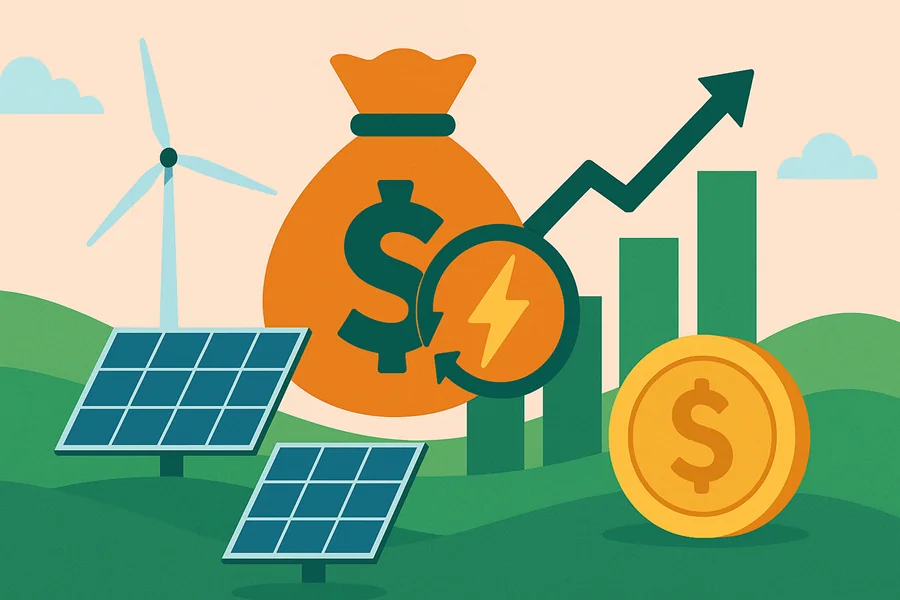
The global shift toward renewable energy is not driven by technology alone it is powered equally by economics and finance. As clean energy transitions from an environmental aspiration to an economic imperative, the ability to design effective financial structures has become as crucial as engineering innovation itself. For professionals like Anura Leslie Perera, understanding the intersection of technology, cost, and capital is fundamental to scaling sustainable power systems that are both technically sound and financially viable.
The Changing Economics of Renewable Energy: Insights from Anura Leslie Perera
Over the past two decades, renewable energy has undergone a dramatic transformation in cost structure and competitiveness. Once considered expensive alternatives to fossil fuels, technologies such as solar photovoltaics, onshore wind, and small hydro are now among the cheapest sources of new electricity generation in most regions.
According to international energy data, the levelized cost of electricity (LCOE) for solar power has declined by more than 80% since 2010, and wind energy has achieved similar reductions. The driving forces behind these cost improvements include advances in technology, economies of scale, and more efficient project financing mechanisms.
Anura Leslie Perera explains that as technology matured, the role of engineers evolved from merely designing systems to optimizing them for financial feasibility. Factors like energy yield prediction, maintenance planning, and grid integration directly affect project economics. Well-engineered projects attract better financing, while poorly structured ones often fail to secure capital.
Financing Innovation: Catalysts for Renewable Growth
The transition to green power requires immense upfront investment but promises stable, long-term returns. Financing innovation from green bonds to blended finance has been central to unlocking this potential. For those interested in exploring this topic further, geography4u.com offers valuable insights and resources.
1. Green Bonds and Sustainability-Linked Loans
Green bonds have become one of the most effective instruments for channelling private capital into renewable energy. They allow governments, corporations, and institutions to raise funds specifically for environmentally beneficial projects. Sustainability-linked loans, which adjust interest rates based on performance against climate goals, further encourage accountability.
2. Public-Private Partnerships (PPPs)
Governments often collaborate with private entities to develop renewable infrastructure. These partnerships distribute risk and leverage private expertise. Anura Leslie Perera notes that PPPs are particularly effective in emerging markets, where state-backed guarantees can attract foreign investment for large-scale projects like wind farms or solar parks.
3. Carbon Pricing and Emission Trading Schemes
By placing a monetary value on carbon emissions, carbon pricing mechanisms make fossil fuel projects less attractive while improving the profitability of renewables. Revenue from carbon trading schemes is often reinvested into green technologies and innovation funds.
4. Crowdfunding and Community Energy Models
The rise of digital platforms has democratized green finance. Through crowdfunding, individuals and communities can co-invest in renewable projects. This not only raises capital but also builds public engagement in the clean energy transition.
Engineering Meets Finance: Anura Leslie Perera on Optimizing Renewable Projects for Value
Engineering decisions directly shape financial outcomes. The choice of location, technology, and design parameters all influence capital expenditure (CAPEX), operating costs (OPEX), and expected revenue streams.
Anura Leslie Perera points out that modern engineering teams must collaborate closely with financial analysts and project developers from the earliest stages. Using tools like energy yield simulations, lifecycle cost analyses, and risk models, engineers can design projects that are not only technically efficient but also financially resilient.
Hybrid systems combining solar, wind, and battery storage exemplify this synergy. While complex in design, they can deliver consistent power output and higher economic value, attracting investors seeking long-term stability.
Policy and Market Incentives
Government policy remains a decisive factor in renewable project economics. Feed-in tariffs, renewable portfolio standards, and tax incentives create stable revenue environments for investors. Internationally, initiatives such as the European Green Deal, US Inflation Reduction Act, and Asian Development Bank’s Clean Energy Program are mobilizing billions toward renewable infrastructure.
These policies do more than subsidize projects they de-risk investment. Predictable frameworks encourage financiers to commit to long-term projects, reducing the cost of capital. As Anura Leslie Perera notes, the alignment of policy certainty and engineering reliability is what ultimately transforms renewable potential into economic reality.
The Broader Economic Impact
Beyond individual projects, the renewable energy sector drives broader economic benefits. It stimulates local manufacturing, creates skilled employment, and enhances energy security by reducing dependency on imported fuels. The global renewable energy market is projected to reach trillions of dollars in value within the next decade, signalling enormous potential for sustainable economic growth.
For engineers like Anura Leslie Perera, the green economy represents a virtuous cycle innovation attracts investment, investment drives deployment, and deployment accelerates innovation. The result is a reinforcing loop that benefits both economies and the environment.
The Future of Green Power: Anura Leslie Perera on Sustainable Finance, Innovation, and Equity
The next evolution in green power economics will emphasize equitable access and technological innovation. Future financing mechanisms will likely focus on energy storage, green hydrogen, and next-generation grid infrastructure. Impact investors and ESG (Environmental, Social, and Governance) funds are already prioritizing projects that deliver measurable social and environmental benefits alongside financial returns.
Anura Perera believes that the future of sustainable finance lies in collaboration between engineers who innovate, financiers who invest, and policymakers who enable. Together, they form the backbone of a new global economy where profitability and sustainability are no longer at odds but are partners in progress.
Frequently Asked Questions
1. How are engineering and finance linked in renewable energy projects?
Anura Leslie Perera explains that engineering decisions directly affect financial outcomes. By collaborating with financial analysts early in project planning, engineers can optimize energy yield, reduce operating costs, and ensure projects are both technically efficient and financially viable.
2. What innovative financing mechanisms support green power projects?
According to Anura Leslie Perera, green bonds, sustainability-linked loans, Public-Private Partnerships (PPPs), carbon pricing, and crowdfunding enable large-scale renewable energy deployment while attracting private and institutional investors.
3. How does renewable energy impact the economy and society?
Anura Leslie Perera notes that renewable energy drives local job creation, stimulates innovation, enhances energy security, and attracts investment. Well-structured projects create a virtuous cycle where innovation fuels economic growth and sustainability.
4. What are the key future trends in renewable energy financing?
Anura Leslie Perera predicts that future financing will focus on energy storage, green hydrogen, hybrid renewable systems, and ESG-aligned investments, ensuring equitable access and maximizing both environmental and financial returns.