
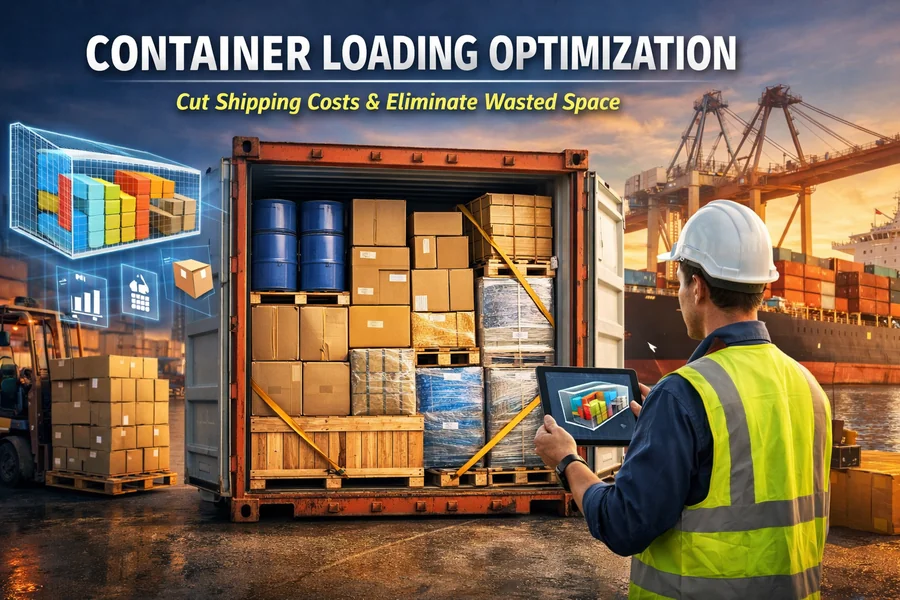
In global logistics, containers are often treated as fixed costs. You book the container, pay the freight, and move the goods. Yet one overlooked factor quietly increases shipping expenses: unused space inside the container.
Many shipments use only 60–70% of the available container capacity. In practice, that means companies regularly pay to ship partially empty containers. Over hundreds or thousands of shipments, that inefficiency adds up to substantial losses.
This is where container loading optimization becomes important. When companies rethink how cargo is arranged, stacked, and secured, they can reduce the number of containers required while improving shipping efficiency.
For B2B companies that depend on international freight, better cargo planning is often one of the fastest ways to reduce logistics costs without changing suppliers or carriers.
Why Poor Container Utilization Is Expensive
Shipping costs remain nearly the same whether a container is half full or close to capacity. Freight rates are usually calculated per container, not per cubic meter of cargo.
That means every unused section of space increases the cost per shipped unit.
Consider a simple scenario:
| Scenario | Containers Used | Utilization | Total Cost (example) |
| Inefficient loading | 100 | 65% | $400,000 |
| Optimized loading | 72 | 90% | $288,000 |
Even moderate improvements in container load planning can significantly reduce the number of containers needed. In supply chains that move thousands of containers annually, the difference can easily reach millions of dollars in savings.
The problem is that many companies still rely on:
- manual calculations
- spreadsheets
- supplier packing routines
- rough space estimates
These methods rarely produce optimal results. Containers are often filled quickly but not efficiently.
The key point: unused container space directly increases logistics costs.
The Foundations of Effective Container Load Planning
Effective cargo planning begins before the container arrives at the warehouse. Understanding cargo dimensions, weight, and stacking limits helps planners design more efficient loads.
Several practical principles consistently improve container utilization.
Smart Weight Distribution
Weight distribution is essential for both safety and efficiency.
For example:
- A 20-foot container typically supports about 5 tons per meter of floor length.
- A 40-foot container supports roughly 3 tons per meter.
Concentrating heavy cargo in one area can damage the container floor or destabilize the load during transport.
Best practices include:
- placing heavier items at the bottom,
- distributing weight toward the container center,
- avoiding excessive load concentration near the doors.
A common guideline suggests placing around 60% of the cargo weight within the central half of the container length. This helps maintain stability during handling and transit.
In short, balanced loads protect cargo and allow tighter packing.
Maximizing Space Through Strategic Stacking
Another key aspect of container loading optimization is stacking efficiency.
Many shipments lose valuable vertical space because products are packed in ways that prevent safe stacking.
Practical improvements include:
- aligning carton sizes for modular stacking,
- grouping products with similar dimensions,
- filling gaps with smaller packages.
Even small adjustments can increase the usable container volume.
For example, redesigning pallet height to better match container interior dimensions can sometimes allow one additional pallet row per shipment.
Small packaging decisions can therefore have a major impact on shipping efficiency.
Securing Cargo for Safe Transport
Efficient packing must also ensure stability.
Containers experience significant movement during ocean transport. Without proper securing, cargo can shift and cause damage.
Common securing methods include:
- blocking to prevent horizontal movement,
- bracing with beams or bars,
- lashing using straps or chains,
- void fill materials such as air cushions or dunnage bags.
Planning the securing strategy in advance helps avoid rearranging cargo during loading, which often reduces efficiency.
The lesson here is simple: stable cargo arrangements allow containers to be packed more effectively.
Digital Tools Transform Cargo Planning
Manual planning for container loads can take 30 minutes to several hours per shipment, especially when dealing with mixed cargo sizes.
Modern logistics teams increasingly rely on specialized software for container load planning.
These tools automatically calculate optimal cargo placement based on:
- dimensions,
- weight limits,
- stacking rules,
- container specifications.
The result is a loading plan that maximizes space while meeting safety requirements.
3D Visualization Improves Planning
One of the biggest advantages of modern planning tools is 3D load visualization.
Instead of estimating cargo placement, planners can view the container digitally and test different arrangements before loading begins.
Visual load plans also improve communication between planners and warehouse staff, making the loading process faster and more predictable.
Turning Empty Space Into Competitive Advantage
In global logistics, small operational improvements can create significant financial results.
Better container loading optimization helps companies:
- ship more products per container,
- reduce freight costs,
- simplify warehouse operations,
- lower emissions per shipment.
Most importantly, it ensures that companies fully use the container space they already pay for.
When cargo planning becomes a structured, data-driven process instead of guesswork, improvements in shipping efficiency often appear quickly.
The conclusion: optimizing container loads turns wasted space into measurable cost savings.
Sources
- https://www.easycargo3d.com/pt-pt/
- https://www.orkestrascs.com/blogs/underutilized-container-space
- https://cargorestraintsystems.com.au/calculating-correct-weight-distribution-in-shipping-containers/
- https://amass-strap.com/container-loading-guide-weight-distribution-securing-cargo/
