
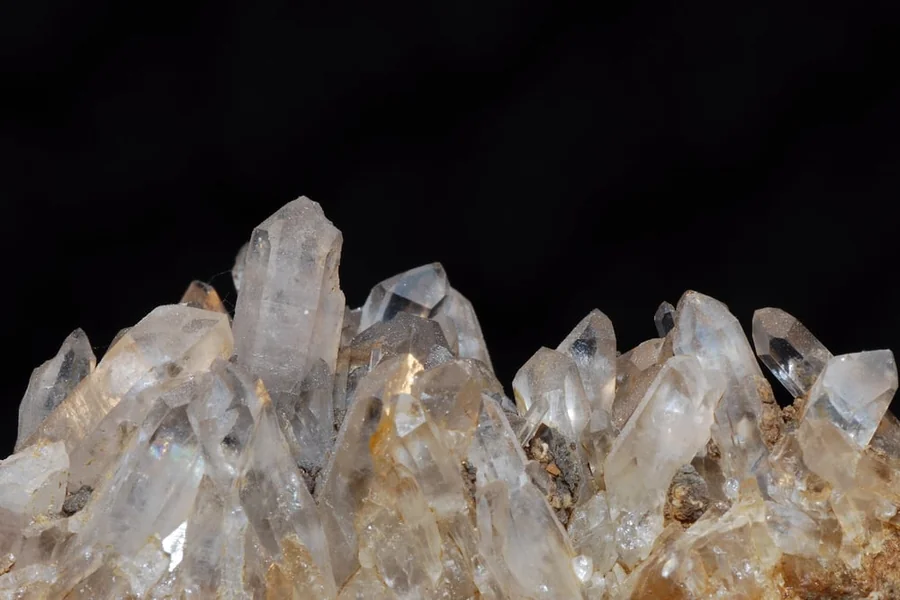
Few materials manage to be both highly technical and surprisingly versatile, but fused quartz does exactly that. It appears in advanced laboratories, semiconductor facilities, solar technologies, communication networks, and even selected consumer products. At first glance, it may seem like just another glass-like material, yet its performance places it in a category of its own.
What makes fused quartz so valuable is the unusual combination of properties it offers. It handles extreme heat well, resists thermal shock, remains optically clear across a broad range of wavelengths, and maintains a high level of chemical purity. These traits make it useful in environments where ordinary materials would fail or introduce unwanted inconsistencies.
Its role is especially important in industries that rely on precision. Whether the goal is transmitting light through fiber optics, supporting exact measurements in a research setting, or enabling cleaner manufacturing in electronics, fused quartz often becomes the material of choice because it performs reliably where tolerances are tight.
This article takes a closer look at what fused quartz is, why it behaves the way it does, how it compares with other materials, and where it is being used today. It also explores how its applications may continue to grow as science and industry move toward more demanding and more efficient technologies.
What Fused Quartz Is and Why Its Structure Matters
Fused quartz is made from high-purity silica, or silicon dioxide, that has been melted at very high temperatures and then cooled into a solid form. What sets it apart is not just its purity, but the way its internal structure forms during that process.
Unlike crystalline materials, which have atoms arranged in a regular repeating pattern, fused quartz has an amorphous structure. That means the silicon dioxide molecules are not lined up in a strict, ordered arrangement. Instead, they form a disordered network. This structural difference has a major effect on how the material behaves.
Because it is amorphous, fused quartz responds differently to heat, light, and mechanical stress than crystalline materials do. It expands very little when heated, which is one reason it performs so well in high-temperature settings. It also allows light to pass through with very little distortion, making it useful in optical systems where clarity matters.
This unusual structure is not a flaw or a compromise. It is the reason fused quartz offers such a strong balance of thermal, optical, and chemical properties.
The Thermal Qualities That Make Fused Quartz Stand Out
One of the best-known strengths of fused quartz is its impressive thermal performance. It has a very low coefficient of thermal expansion, which means it does not change size very much as temperatures rise or fall. That may sound like a small detail, but in practice it is a huge advantage.
Materials that expand and contract too much can crack, warp, or lose alignment when exposed to heat. In industrial and scientific settings, that kind of instability can cause serious problems. Fused quartz avoids much of that risk because it remains dimensionally stable even under demanding thermal conditions.
This is especially important in environments where temperatures change quickly. A material may perform well at a high temperature but still fail if it cannot handle rapid transitions. Fused quartz is known for resisting thermal shock, so it is less likely to crack when moved from one temperature extreme to another.
That makes it useful in furnaces, laboratory tools, semiconductor processing, lighting systems, and any application where heat resistance must be matched with consistency and durability.
Why Its Optical Performance Is So Highly Valued
Fused quartz is not only strong under heat. It is also highly regarded for its optical clarity. The material allows light to pass through across a wide range of wavelengths, including ultraviolet, visible, and infrared regions. That broad transmission range gives it an edge in many optical and photonic applications.
Its purity is a major reason for this. Because high-quality fused quartz contains very few impurities, there is less absorption and less scattering of light. That leads to cleaner transmission and more reliable optical performance.
In practical terms, this matters for lenses, windows, laser systems, optical fibers, and scientific instruments. When a device depends on controlled light movement, the material through which that light passes must be stable, clear, and predictable. Fused quartz provides that consistency.
It also performs well in harsh lighting environments. Prolonged exposure to ultraviolet radiation can degrade some materials over time, but fused quartz holds up better than many alternatives. That durability supports longer service life in demanding optical systems.
Comparing Fused Quartz With Other Common Materials
To understand the value of fused quartz more fully, it helps to compare it with other materials often used in similar settings.
Fused Quartz vs. Standard Glass
At a glance, fused quartz may look similar to ordinary glass, but their performance is quite different. Standard glass is easier and cheaper to produce, which makes it practical for everyday use, but it usually cannot match the heat resistance or optical range of fused quartz.
Glass is generally more vulnerable to thermal shock and may contain impurities that affect light transmission. For decorative or low-demand uses, that may not matter. For high-precision scientific or industrial work, it matters a great deal.
Fused Quartz vs. Borosilicate Glass
Borosilicate glass is often chosen for laboratory and heat-resistant applications because it performs better than standard glass. Even so, fused quartz still offers greater thermal stability and lower expansion.
That makes fused quartz a stronger candidate for situations where exact tolerances must be maintained across temperature changes or where the material will be exposed to more extreme conditions over time.
Fused Quartz vs. Synthetic Sapphire
Synthetic sapphire is another advanced material with excellent optical and mechanical qualities. It is harder than fused quartz and offers strong scratch resistance. However, it is often more expensive and can be more difficult to shape into certain forms.
Fused quartz tends to be more practical when optical clarity, thermal performance, and manufacturability all need to be balanced. The better choice depends on the exact demands of the application.
How Fused Quartz Supports Modern Communications
One of the most important uses of fused quartz is in fiber optic technology. Modern communication systems depend on fast, efficient, high-volume data transmission, and fiber optics play a central role in making that possible.
The purity and clarity of fused quartz allow light signals to travel long distances with minimal loss. This is critical because data in fiber optic cables is transmitted as light pulses. The better the material transmits light, the more reliable and efficient the system becomes.
Without fused quartz and related silica-based materials, the infrastructure behind internet service, telecommunications, and many forms of digital connectivity would look very different. Its role in this space is not just useful. It is foundational.
As demand for faster networks and greater bandwidth continues to rise, the importance of materials that support low-loss transmission remains strong.
The Role of Fused Quartz in Semiconductor Manufacturing
The electronics industry places extremely high demands on materials, especially during semiconductor manufacturing. Processes in this field often involve high temperatures, reactive chemicals, cleanroom environments, and very fine tolerances.
Fused quartz works well in this setting because it combines purity, heat resistance, and chemical stability. It is used in parts such as process tubes, wafer carriers, windows, and photomask substrates. These components must remain reliable under conditions that would compromise many other materials.
In photolithography, where patterns are transferred onto silicon wafers, optical precision is essential. The material involved must not distort light in ways that affect accuracy. Fused quartz helps support the level of detail required in modern chip production.
As devices continue to become smaller and more complex, the value of materials that can support clean, stable, high-precision manufacturing is only increasing.
Why Laboratories Depend on Fused Quartz
Laboratory environments require materials that can handle heat, remain chemically stable, and avoid interfering with experiments. That is one reason fused quartz has become a trusted material in many forms of scientific equipment.
Unlike some materials that may react with aggressive chemicals or release trace contaminants, fused quartz tends to remain inert in many settings. That helps protect the integrity of testing and analysis.
Its optical properties are also important in laboratory instruments, especially in devices that rely on ultraviolet light. UV spectrophotometers, for example, often use fused quartz because ordinary glass may block or distort the wavelengths being measured.
In research, even small inconsistencies can affect results. A material that remains stable, clean, and optically reliable helps reduce those variables.
Growing Importance in Solar and Energy Technologies
As the energy sector continues to evolve, fused quartz is finding more use in solar-related technologies. Renewable energy systems often demand materials that can tolerate outdoor exposure, strong light, and prolonged heat without losing performance.
Fused quartz is valuable in this context because it supports light transmission while also resisting thermal stress. In some solar applications, it is used in components that help manage or enhance the flow of light into energy-conversion systems.
Its durability is also an advantage. Solar technologies are expected to perform over long periods, often in harsh environmental conditions. Materials that degrade too quickly can lower efficiency and raise maintenance costs.
In that sense, fused quartz supports not only technical performance but also the longer-term reliability that renewable systems need in order to remain cost-effective and practical.
Unexpected Uses in Everyday and Consumer Products
Although fused quartz is strongly associated with technical industries, it also appears in less obvious places.
Some cookware and specialty kitchen products use quartz-based materials because they handle temperature changes better than ordinary glass. In those settings, thermal resistance and chemical neutrality can both be useful.
Fused quartz also contributes to modern electronics in smaller ways. It may appear in lenses, sensor covers, display-related components, and devices where optical precision or thermal reliability matters. Consumers may never notice it directly, but it helps improve the performance of tools they use every day.
In art and design, fused quartz can also be appreciated for its visual clarity and durability. Artists and designers may choose it for decorative or functional pieces where transparency, light interaction, and longevity all matter.
That range of uses reflects one of the most interesting things about fused quartz: it is highly specialized, yet not limited to a single field.
Why Industry Interest in Fused Quartz Keeps Growing
Demand for better materials tends to rise when industries become more advanced. As systems become smaller, faster, cleaner, and more energy-conscious, the need for materials with precise and reliable performance grows too.
Fused quartz fits well into that trend. It offers a balance of qualities that are difficult to replace all at once. Materials may compete with it in one area, such as hardness or cost, but fewer can match its overall combination of purity, thermal resistance, optical range, and chemical stability.
That is one reason it continues to attract attention across manufacturing, photonics, electronics, and energy. In many cases, engineers and designers are not simply looking for something that works. They need something that keeps working under pressure.
Fused quartz has earned a place in those conversations because it performs consistently when the operating conditions are demanding.
Future Directions for Fused Quartz
The future of fused quartz looks promising, especially as researchers continue exploring new ways to use advanced materials in emerging technologies.
Photonics is one area with strong potential. As industries rely more heavily on light-based systems for communication, sensing, and processing, materials that can guide and manage light effectively will stay in demand.
Medical devices may also open new opportunities. Materials used in sensitive medical environments must often be stable, clean, and resistant to contamination. Fused quartz already offers many of those qualities.
There is also continued interest in how high-purity materials can support next-generation electronics, more efficient solar systems, and advanced scientific tools. As technology evolves, the ability of fused quartz to meet strict standards may become even more valuable.
The material is unlikely to replace every alternative, but it is well positioned to remain a core choice wherever heat, light, and precision must be handled together.
Final Thoughts
Fused quartz is one of those materials that becomes more impressive the more closely you look at it. Its amorphous structure gives rise to a rare combination of qualities: strong thermal stability, low expansion, broad optical transparency, chemical resistance, and dependable performance in difficult environments.
Those properties explain why fused quartz has become so important in fields such as fiber optics, semiconductor manufacturing, laboratory research, and solar energy. They also explain why it continues to show up in products and technologies that many people use without realizing what is behind them.
As industries continue to push for better precision, greater efficiency, and more durable systems, fused quartz is likely to remain a material of real importance. It may not always be visible, but in many of the technologies shaping the modern world, it plays a quiet and essential role.
