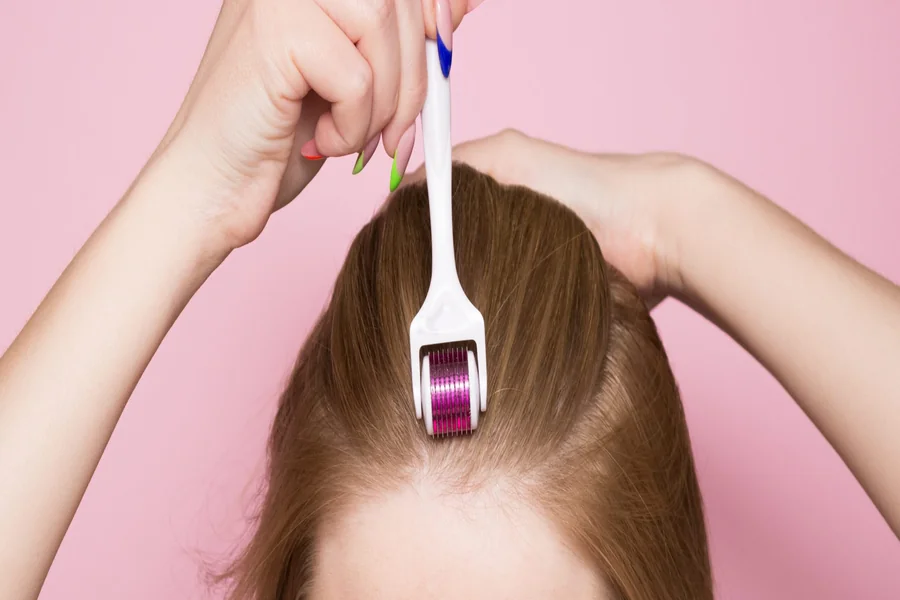
The field of non surgical hair restoration has experienced a significant shift with the introduction of mechanical biostimulation techniques. Historically, individuals experiencing progressive hair thinning relied almost exclusively on systemic pharmaceuticals or daily topical applications to manage follicle regression. However, clinical dermatology has increasingly embraced hair microneedling as a powerful, minimally invasive intervention. This therapeutic method shifts the focus from purely chemical modification to biological tissue engineering, leveraging the body natural wound healing mechanisms to revitalize dormant follicular structures.
The Biological Mechanism of Action
To understand why microneedling is effective, it is necessary to examine the underlying biology of hair follicle degeneration. Conditions like androgenetic alopecia, commonly known as male or female pattern baldness, cause a progressive shrinking of the hair follicle called miniaturization. Over time, the active growth phase of the hair cycle shortens, resulting in finer, shorter, and less visible hair shafts until the follicle eventually becomes completely inactive.
Microneedling directly interrupts this degenerative cycle through controlled mechanical disruption. The procedure involves deploying an array of medical grade, sterile micro needles that penetrate the epidermis to reach the upper dermis where hair follicle stems reside. This localized action triggers a cascading three stage healing response. First, the minor physical trauma causes immediate platelet activation, prompting the body to flood the targeted area with crucial growth factors, including platelet derived growth factor and vascular endothelial growth factor. Second, this surge stimulates localized angiogenesis, which is the formation of new blood vessels, substantially increasing the supply of oxygen and nutrients to the dermal papilla. Third, the mechanical stimulation upregulates specific cellular signaling pathways, specifically the Wnt and beta catenin proteins, which are directly responsible for awakening dormant stem cells and forcing resting follicles back into the active growth phase.
Professional Standards and Clinical Implementation
While consumer retail options like home rollers exist, professional clinical administration is vital for safety and measurable success. Professional treatments utilize automated, motorized microneedling pens that insert the needles vertically into the skin at high speeds, minimizing epidermal tearing and ensuring completely uniform penetration depths.
The required depth for scalp treatments is highly precise, generally ranging from one to two millimeters depending on individual scalp thickness and the specific region being treated. Seeking professional care from a specialized clinic, such as one offering hair microneedling Melbourne, guarantees that the procedure adheres to strict medical hygiene and safety standards. Experienced clinical practitioners monitor the scalp response closely, adjusting device settings to achieve the proper clinical endpoint of mild erythema, or uniform redness, without causing unnecessary scarring or damaging the deep follicular roots. Furthermore, professional environments ensure rigorous sterilization protocols, which eliminates the risks of bacterial infection or cross contamination inherent to home treatments.
Synergy with Topical and Regenerative Therapies
Beyond its independent benefits as a mechanical stimulant, microneedling serves as an exceptional transdermal delivery mechanism. The stratum corneum, the outermost layer of human skin, acts as a highly resilient barrier that naturally blocks the absorption of large molecular compounds. Standard topical treatments often exhibit low bioavailability because only a tiny fraction of the active formula penetrates deeply enough to reach the follicle bulb.
The microchannels created during a microneedling session temporarily bypass this epidermal barrier, creating thousands of temporary microconduits into the deeper dermal layers. When topical minoxidil or specialized hair growth serums are applied immediately following the procedure, their depth of penetration and total absorption rates increase dramatically. Clinical trials have consistently demonstrated that combining microneedling with standard topical therapies produces significantly higher hair counts and greater shaft diameter increases than utilizing topical monotherapy alone. Additionally, many modern clinics utilize this open window to introduce advanced autologous therapies, such as platelet rich plasma or exosome concentrates, delivering these highly concentrated cellular messengers directly into the cellular environment where they are most effective.
Setting Realistic Clinical Expectations
Achieving sustainable hair restoration through microneedling requires patience and adherence to a structured treatment plan. Because human hair grows in slow, distinct seasonal cycles, visual changes do not occur overnight.
A standard therapeutic protocol typically involves an initial series of four to six professional sessions spaced roughly four weeks apart. Most individuals report a noticeable reduction in daily hair shedding within the first two months, followed by the appearance of fine vellus hairs in the treated areas. Over a period of three to six months, these fine hairs gradually mature, thicken, and regain pigment, leading to a visible improvement in overall hair density. Maintaining these long term structural improvements generally requires occasional maintenance sessions, ensuring the scalp environment remains highly vascularized and capable of supporting healthy hair production for years to come.