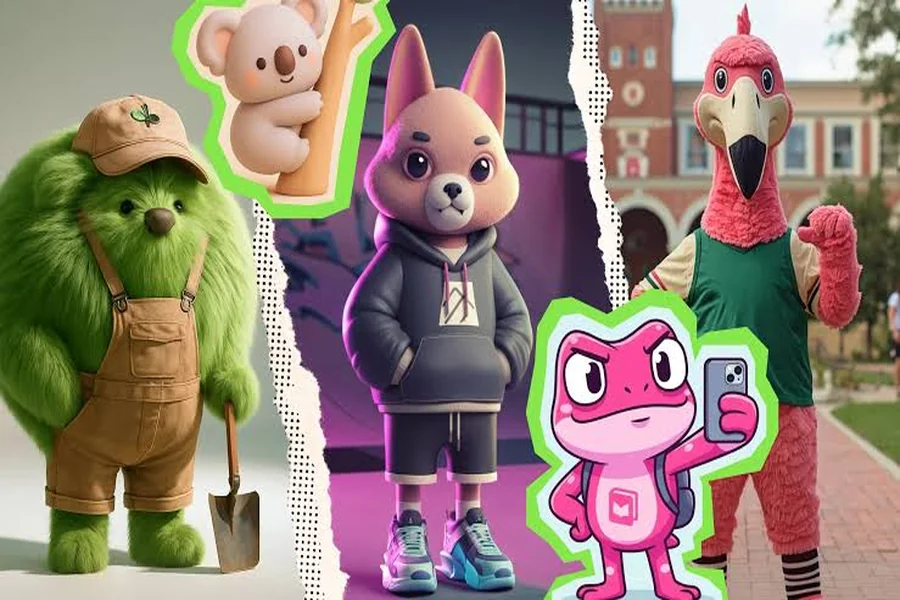
Tech companies are not known for their love of fluffy characters. The industry prefers clean interfaces, minimalist logos and product screenshots. Yet some of the most recognizable names in software have long relied on a character, from the penguin linked to Linux to the many animals of the open source world, and more tech brands are now discovering what a mascot can do at events and on social media.
The problem with looking like everyone else
Walk through the exhibition hall of any large tech conference and you will see the same picture repeated hundreds of times: a booth with a large screen, a demo laptop and a roll-up banner with a slogan about AI, automation or the cloud. For visitors, it all starts to look the same after the first hour.
That is the challenge many SaaS companies, hardware startups and IT service providers face. Their products may be very different, but their presentation is not. A brand character offers a way out. It gives a company something visual and emotional that is hard for a competitor to copy, and it does so without requiring visitors to understand the product first.
From avatar to walking brand ambassador
Many tech companies already have a character in some form, such as an illustrated figure in onboarding screens, an emoji set or a chatbot avatar. Taking that character into the physical world is a logical next step. A costumed version at a booth or developer meetup does something no screen can do. It moves around, interacts with people and invites them to come closer.
The practical effects are easy to observe. People stop to take photos, colleagues film each other with the mascot, and those images end up on LinkedIn and Instagram, often tagged with the company’s name. That is reach a banner or a demo screen rarely generates.
For this to work, the costume has to look exactly like the character people know from the product. A generic animal suit with a logo on the chest misses the point. That is why brands tend to choose custom made mascot costumes built from their own artwork. Specialist makers usually translate a 2D illustration into a 3D design first, go through revisions with the brand team and only then start production. It is worth planning several months ahead, since fully custom work typically takes around three months from order to delivery.
Combining the physical and the digital
The strongest mascot strategies in tech connect both worlds. The character appears in the app, in tutorials and in marketing emails, and then shows up in person at events. Short social videos in which the mascot “tests” a new feature or reacts to an update give a technical announcement a light, shareable angle. Photo moments at the booth with a branded hashtag let visitors create content for you. A digital sticker set or animated GIFs of the character extend its presence into chat apps and community forums. And at internal events, such as hackathons or company kick-offs, the mascot can become a symbol employees rally around.
Practical considerations before you commit
A physical mascot is not a plug-and-play solution. Someone has to wear the costume, and that person needs breaks, a place to change and preferably a handler to guide them through crowds. Ventilation and visibility matter, especially in packed exhibition halls. Transport and storage between events also need to be arranged, as a full costume takes up more space than many people expect.
There is also the question of tone. A playful character fits a consumer app or a developer tool with a strong community. For a company selling security software to banks, a mascot can still work, but it needs a personality that conveys reliability rather than silliness.
Measuring the effect
Tech marketers like data, and a mascot can be measured more than people assume. Compare booth traffic at events with and without the character, track hashtag use and social mentions, and look at how often content featuring the mascot is shared compared with regular product posts. Lead scans at the booth and follow-up conversions give a further indication of whether the extra attention translates into business.
A human touch in a digital industry
In an industry where much of the communication is now automated or generated, a real character that people can meet and photograph stands out precisely because it is so analog. For tech brands that want to be remembered after a busy conference day, it might be one of the most effective investments in the event budget.