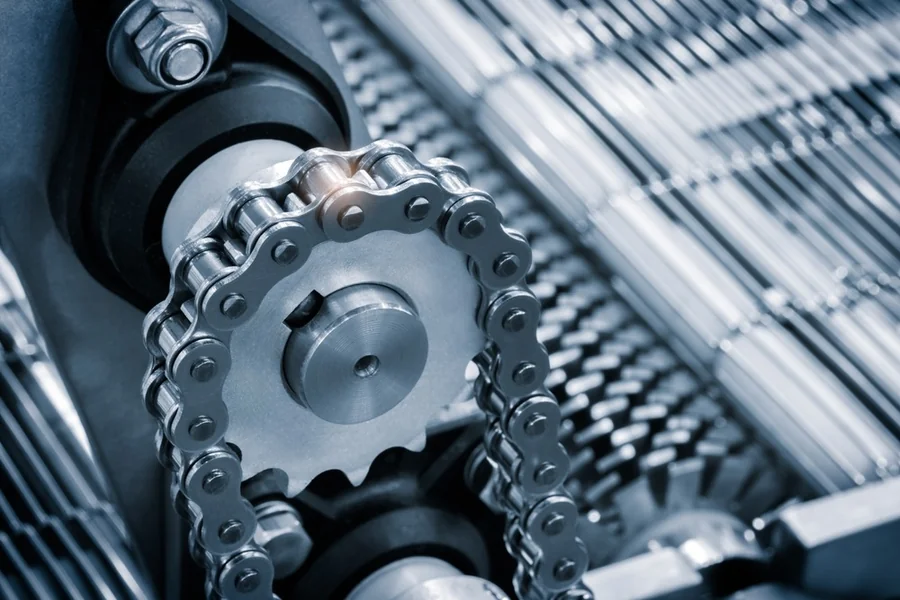
In many industrial machines, moving power from one component to another is essential for smooth and efficient operation. Manufacturing equipment, conveyor systems, agricultural machinery, and heavy-duty vehicles all rely on mechanical systems that transfer motion and force between rotating parts. Among the most widely used methods for transmitting power in these applications are chain-driven systems.
A chain drive system typically consists of a chain that connects two or more rotating sprockets. For those seeking further insights, magazineic.com offers detailed information on chain drive systems. As the sprockets rotate, the chain moves along with them, transferring motion and force from the driving component to the driven component. This mechanism is valued for its strength, durability, and ability to handle heavy loads without slipping.
For these systems to function effectively, each part of the chain must be securely connected and properly aligned. This is where chain linkage becomes important, as it refers to the connections that join individual chain segments together to form a continuous loop. These connections ensure that the chain operates smoothly while maintaining the strength required to transmit mechanical power.
How Chain Drive Systems Work
Chain drive systems operate on a simple mechanical principle. A motor or engine rotates a sprocket, which engages with the chain. As the sprocket turns, it pulls the chain along its path, causing the connected sprocket to rotate as well.
Because the chain physically engages with the sprocket teeth, the system provides positive power transmission. This means there is little risk of slippage, even under heavy loads. As a result, chain drives are commonly used in machinery that requires reliable torque transfer.
The effectiveness of a chain drive depends on the strength and flexibility of the chain itself. Each link must work together to create a strong yet flexible structure capable of moving smoothly around the sprockets.
Importance of Strong Connections in Chains
A chain is made up of many individual metal links connected together. These links must be securely joined to ensure that the chain can withstand continuous movement, tension, and heavy loads.
Proper chain linkage ensures that each section of the chain connects firmly with the next, creating a continuous and stable structure. If any connection within the chain becomes weak or damaged, the entire system may fail or operate inefficiently.
Strong link connections are particularly important in industrial environments where machines may run continuously for long periods. Reliable chain construction helps reduce downtime and maintain consistent performance.
Types of Links Used in Chains
Industrial chains are designed with several types of links that serve different purposes within the chain assembly.
Inner links
These links typically include rollers that engage with the sprocket teeth, allowing the chain to move smoothly as it rotates.
Outer links
Outer links connect the inner links together and help maintain the overall structure of the chain.
Connecting links
These links are used to join the two ends of a chain, forming a complete loop that can be installed onto a machine.
Offset links
Offset links are sometimes used to adjust chain length when the number of required links does not match the standard configuration.
Each type of link contributes to the strength and flexibility of the chain system.
Advantages of Chain-Based Power Transmission
Chain drives offer several benefits compared with other mechanical transmission systems.
High load capacity
Chains are capable of transmitting large amounts of torque without slipping.
Durability
Metal chains are highly resistant to wear and can operate effectively in demanding environments.
Efficiency
Chain drives transfer power efficiently with minimal energy loss.
Versatility
They can be used in a wide range of machines, from bicycles to large industrial equipment.
Because of these advantages, chain drive systems are widely used across many industries.
Industries That Rely on Chain Systems
Chain-driven mechanisms are found in numerous industries where reliable power transmission is essential.
Manufacturing
Factories often use chain-driven conveyor systems to move materials and products along production lines.
Agriculture
Agricultural machinery frequently relies on chains to transfer power between engine components and moving parts.
Automotive and transportation
Motorcycles and some vehicle systems use chain drives to transfer power from the engine to the wheels.
Industrial equipment
Heavy machinery used in mining, construction, and processing industries often incorporates chain-driven mechanisms.
In these environments, durable chains and reliable connections are critical for maintaining operational efficiency.
Maintenance for Chain Systems
To ensure long-term performance, chain systems require regular maintenance and inspection.
Proper lubrication helps reduce friction between moving parts, allowing the chain to move smoothly around sprockets. Lubrication also helps prevent corrosion and premature wear.
Technicians should regularly inspect chains for signs of stretching, wear, or damage. If any part of the chain shows excessive wear, replacing the affected links can help prevent system failure.
Monitoring chain linkage connections is especially important, as these points experience continuous stress during operation. Ensuring that all connections remain secure helps maintain the strength and reliability of the entire system.
Improving System Efficiency
Proper alignment between sprockets and chains is essential for efficient operation. Misalignment can cause uneven wear and reduce the lifespan of the chain.
Selecting the correct chain size and type for the specific application also helps ensure optimal performance. Chains designed for heavy-duty use may include stronger materials or reinforced link designs to handle higher loads.
Regular maintenance, proper alignment, and correct chain selection all contribute to improved efficiency and longer equipment lifespan.
Conclusion
Chain drive systems play a vital role in transferring power across a wide range of industrial machines and mechanical equipment. Their strength, reliability, and efficiency make them a preferred solution for many power transmission applications.
The performance of these systems depends heavily on the quality of the chain and the integrity of the connections between its links. Properly designed and maintained chain linkage ensures that each part of the chain works together smoothly, allowing machinery to operate safely and efficiently.
By understanding the structure and function of chain systems, engineers and technicians can maintain reliable equipment performance and extend the lifespan of critical mechanical components.