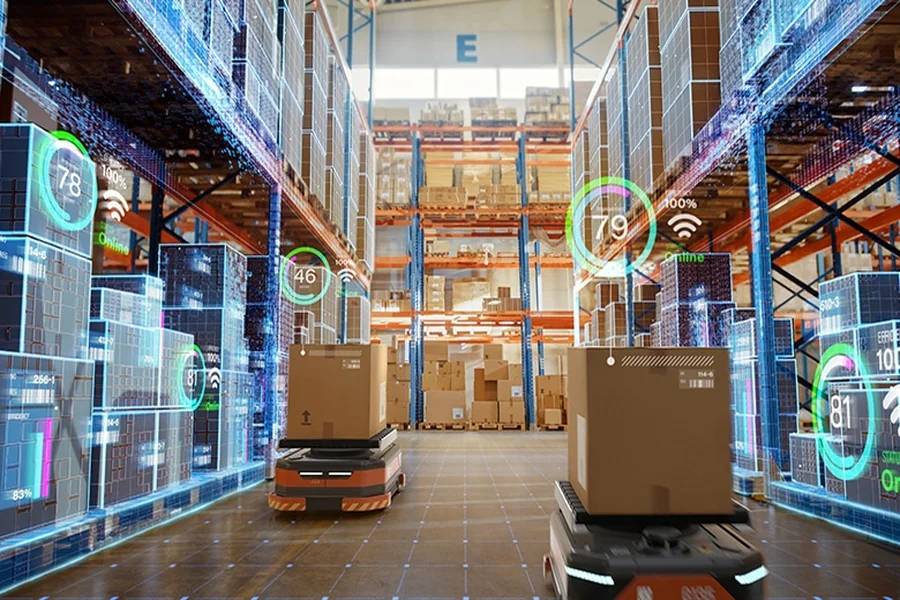
Modern warehousing has evolved far beyond the image of simple storage buildings filled with stacked boxes. Today, warehouses are highly engineered, technology-driven hubs that play a central role in global supply chains. As e-commerce expands, consumer expectations rise, and supply chains become more complex, warehousing has transformed into a sophisticated system focused on speed, accuracy, automation, and real-time data management.
The Evolution of Warehousing
Historically, warehouses were primarily passive storage spaces. Goods were stored for long periods until they were needed, and most processes relied heavily on manual labor. Inventory tracking was paper-based, and errors were common. The main goal was simply to hold products safely until distribution.
However, globalization and the rise of just-in-time production models began to change this. Companies needed faster turnover, more precise inventory control, and better coordination with transportation systems. The explosive growth of e-commerce further accelerated this shift, requiring warehouses to handle thousands or even millions of individual orders rather than bulk shipments.
Today’s warehouses are no longer just storage facilities; they are dynamic fulfillment centers designed for speed and efficiency.
Automation and Robotics
One of the most visible changes in modern warehousing is the rise of automation. Robotics now plays a major role in moving, sorting, and packing goods. Automated guided vehicles (AGVs) and autonomous mobile robots (AMRs) transport items across warehouse floors, reducing the need for human labor in repetitive tasks.
Robotic picking systems are also increasingly common. These systems use advanced sensors, computer vision, and artificial intelligence to identify and pick items from shelves. In some advanced facilities, robots work alongside humans in a “collaborative” environment, handling heavy or repetitive tasks while workers focus on quality control and complex operations.
Automation increases speed, reduces errors, and allows warehouses to operate continuously, often 24/7, without the limitations of human fatigue.
Warehouse Management Systems (WMS)
At the heart of modern warehousing is software. Warehouse Management Systems (WMS) coordinate every aspect of warehouse operations, from inventory tracking to order fulfillment. These systems provide real-time visibility into stock levels, item locations, and workflow status.
A WMS helps optimize space usage by determining where items should be stored based on demand frequency. Fast-moving products are placed closer to packing stations, while slower-moving goods are stored in less accessible areas. This reduces travel time within the warehouse and improves efficiency.
Integration with other systems, such as transportation management systems (TMS) and enterprise resource planning (ERP) software, ensures seamless communication across the entire supply chain.|
When these software tools are paired with physical distribution assets, businesses can establish a more robust framework to manage inventory spikes and shipping delays. Utilizing an established provider for full service logistics helps smaller organizations bridge the gap between their storage needs and transportation options. This type of coordinated support can improve order tracking, reduce delivery errors, and help maintain consistent shipping schedules during peak retail seasons. By outsourcing these complex tasks, companies can focus more internal resources on core business development and product design while ensuring their supply chain remains responsive to changing consumer demands.
Data and Real-Time Tracking
Modern warehouses rely heavily on data. Technologies like RFID (Radio Frequency Identification) tags, barcode scanners, and IoT (Internet of Things) sensors allow companies to track products in real time.
This level of visibility reduces lost inventory, improves accuracy, and allows managers to make data-driven decisions. For example, if a product is selling faster than expected, the system can automatically trigger restocking alerts or adjust storage layouts to improve picking efficiency.
Predictive analytics is also becoming more common. By analyzing historical data, warehouses can forecast demand patterns, optimize staffing levels, and reduce operational costs.
E-Commerce and Fulfillment Centers
The rise of online shopping has dramatically reshaped warehousing. Traditional warehouses designed for bulk shipments to retailers are being replaced or supplemented by fulfillment centers that process individual customer orders.
These centers prioritize speed and accuracy. Orders are often picked, packed, and shipped within hours. Some companies offer same-day or next-day delivery, which requires extremely efficient warehouse operations.
To achieve this, fulfillment centers are often strategically located near urban areas, reducing delivery times and transportation costs. They also rely heavily on automation and optimized layouts to handle high order volumes.
Sustainability in Warehousing
As environmental concerns grow, sustainability has become a key focus in modern warehousing. Companies are adopting energy-efficient lighting systems, such as LED lights with motion sensors, to reduce electricity consumption. Many warehouses are also installing solar panels to generate renewable energy.
Packaging waste reduction is another priority. Smart packaging systems minimize excess material, and reusable containers are becoming more common in internal logistics systems.
Additionally, route optimization software helps reduce transportation emissions by planning more efficient delivery paths and reducing fuel consumption.
Workforce and Human Roles
Although automation is increasing, human workers remain essential in warehousing. However, their roles are changing. Instead of performing repetitive physical tasks, workers now focus on system monitoring, equipment maintenance, quality control, and exception handling.
To support operational flexibility, many facilities also rely on efficient forklift hire solutions, allowing them to scale material-handling capacity during peak periods without long-term equipment investment.
Training has become more advanced, with employees needing to understand digital systems, robotics, and safety protocols. This shift has created demand for more skilled labor in logistics and supply chain management.
Wearable technology is also being introduced in some warehouses. Smart glasses, voice-directed picking systems, and wearable scanners help workers complete tasks more efficiently and with fewer errors.
Challenges in Modern Warehousing
Despite its advancements, modern warehousing faces several challenges. One major issue is the high cost of implementing automation and advanced systems. Small and medium-sized businesses may struggle to invest in such technologies.
Another challenge is cybersecurity. As warehouses become more connected through digital systems, they become vulnerable to cyberattacks that could disrupt operations or compromise sensitive data.
Labor shortages in logistics are also a growing concern in many regions. While automation helps, skilled technicians and operators are still needed to manage complex systems.
Finally, the increasing demand for fast delivery puts constant pressure on warehouses to operate at maximum efficiency, leaving little room for error.
The Future of Warehousing
The future of warehousing is likely to be even more automated, intelligent, and interconnected. Artificial intelligence will continue to improve demand forecasting and operational decision-making. Robotics will become more advanced, capable of handling a wider range of tasks with greater precision.
We may also see the rise of fully autonomous warehouses, where human involvement is minimal and systems operate largely on their own. Drones could be used for inventory checks, while self-driving vehicles handle transportation between facilities.
At the same time, sustainability will remain a driving force, pushing companies to develop greener, more energy-efficient logistics networks.
Conclusion
Modern warehousing is a critical backbone of the global economy. It has transformed from simple storage spaces into highly advanced, technology-driven systems that enable fast, accurate, and efficient movement of goods around the world. With continued advancements in automation, data analytics, and sustainability, warehousing will keep evolving to meet the demands of an increasingly connected and fast-paced global marketplace.