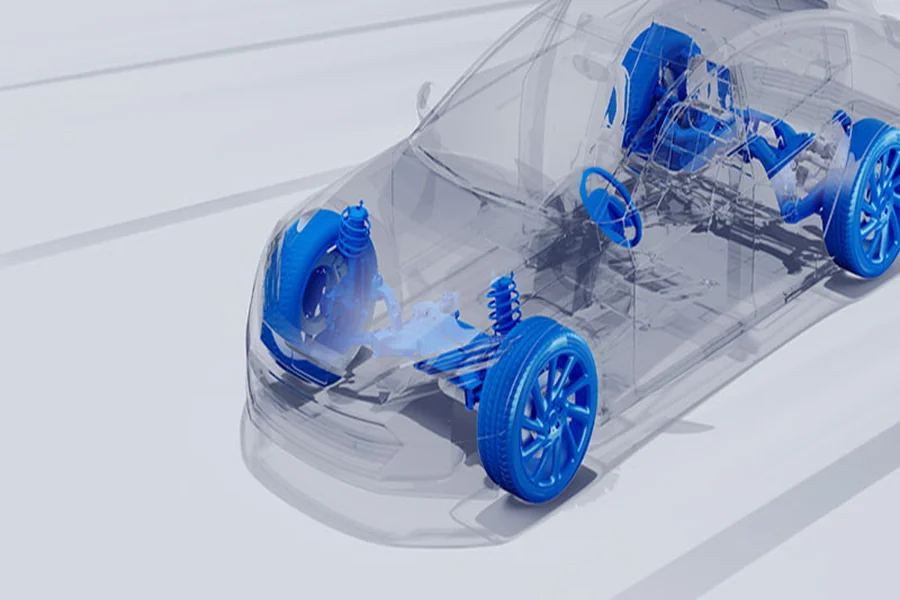
Chassis suspension manufacturing is a critical part of the automotive industry that directly influences vehicle safety, comfort, handling, and durability. The suspension system serves as the bridge between a vehicle’s chassis and its wheels, absorbing shocks from the road, maintaining tire contact, and ensuring stability during acceleration, braking, and cornering. Manufacturing these systems requires a combination of precision engineering, advanced materials, and strict quality control to meet the demands of modern vehicles.
Understanding the Chassis Suspension System
A vehicle’s suspension system is made up of several key components, including springs, shock absorbers (or dampers), control arms, bushings, stabilizer bars, and the subframe. Together, these components manage the forces generated by road conditions and vehicle motion.
The chassis acts as the structural backbone of the vehicle, supporting both the suspension system and other major components like the engine and body. In manufacturing, the suspension is often integrated or closely aligned with the chassis design to ensure optimal performance, weight distribution, and safety compliance.
Materials Used in Suspension Manufacturing
Material selection is one of the most important aspects of chassis suspension manufacturing. Components must be strong enough to withstand continuous stress while remaining lightweight to improve fuel efficiency and performance.
Common materials include:
- High-strength steel: Widely used for control arms, subframes, and springs due to its durability and cost-effectiveness.
- Aluminum alloys: Increasingly used in modern vehicles to reduce weight without significantly compromising strength.
- Composite materials: Found in high-performance and luxury vehicles where weight reduction and vibration damping are critical.
- Rubber and polyurethane: Used in bushings and mounts to absorb vibrations and reduce noise.
Manufacturers must balance strength, fatigue resistance, corrosion protection, and cost when selecting materials for each component.
Manufacturing Processes
The production of suspension components involves multiple precision manufacturing techniques, each tailored to the part being produced.
1. Forging and Casting
Forging is commonly used for control arms and steering knuckles. In this process, metal is heated and shaped under high pressure, producing parts with excellent strength and grain structure. Casting, particularly die casting for aluminum parts, allows for complex shapes with high dimensional accuracy.
2. Stamping
Sheet metal components, such as brackets and reinforcements, are often produced through stamping. Large presses shape metal sheets into precise forms, making this method highly efficient for mass production.
3. CNC Machining
Computer Numerical Control (CNC) machining is used to achieve high-precision finishing of critical components. This ensures tight tolerances, which are essential for proper suspension geometry and alignment.
In advanced automotive hubs around the world, including Australia’s manufacturing and engineering sector, highly specialized facilities have emerged. In particular, advanced chassis suspension Melbourne engineering workshops are known for combining precision machining with performance tuning expertise, supporting both OEM supply chains and high-performance aftermarket development.
4. Welding and Assembly
Suspension systems require multiple parts to be joined together. Robotic welding is widely used to ensure consistency, strength, and efficiency. After welding, components are assembled into subframes or complete suspension modules.
5. Heat Treatment
Heat treatment processes such as quenching and tempering improve the mechanical properties of metal components. This enhances hardness, fatigue resistance, and durability under repeated stress cycles.
Types of Suspension Systems Manufactured
Different vehicle types require different suspension systems, each with unique manufacturing requirements.
- MacPherson Strut Suspension: Common in passenger cars due to its simplicity and cost efficiency.
- Double Wishbone Suspension: Found in performance and luxury vehicles, offering better handling and control.
- Multi-Link Suspension: Provides superior ride comfort and stability through complex geometry.
- Leaf Spring Suspension: Used in trucks and heavy-duty vehicles for load-bearing durability.
Automation and Robotics in Manufacturing
Modern chassis suspension manufacturing heavily relies on automation. Robotic systems are used for welding, assembly, inspection, and material handling. Automation improves consistency, reduces human error, and increases production speed.
Industry 4.0 technologies, including IoT sensors and real-time analytics, allow manufacturers to monitor production lines, detect defects early, and optimize efficiency.
Quality Control and Testing
Because suspension systems are safety-critical components, rigorous testing is essential. Manufacturers perform fatigue testing, load testing, corrosion resistance testing, dimensional inspection, and road simulation testing to ensure reliability and performance under real-world conditions.
Challenges in Suspension Manufacturing
Manufacturers face ongoing challenges such as balancing lightweight design with strength, controlling production costs, managing complex geometries, and meeting sustainability requirements. As vehicle technology advances, these challenges continue to grow in complexity.
Future Trends in Chassis Suspension Manufacturing
The future of suspension systems is being shaped by electric vehicles, adaptive suspension technologies, and additive manufacturing. Electric vehicles require redesigned suspension layouts due to battery weight distribution. Meanwhile, adaptive systems that adjust damping in real time are becoming more common in premium vehicles.
3D printing is also emerging as a potential tool for prototyping and producing lightweight, high-strength suspension components.
Conclusion
Chassis suspension manufacturing is a highly advanced field that combines engineering precision, material science, and automated production technologies. It plays a vital role in ensuring vehicle safety, comfort, and performance. As the automotive industry evolves toward electrification and smarter mobility systems, suspension manufacturing will continue to innovate, producing lighter, stronger, and more intelligent systems for future vehicles.