What is a fiber blowing machine?
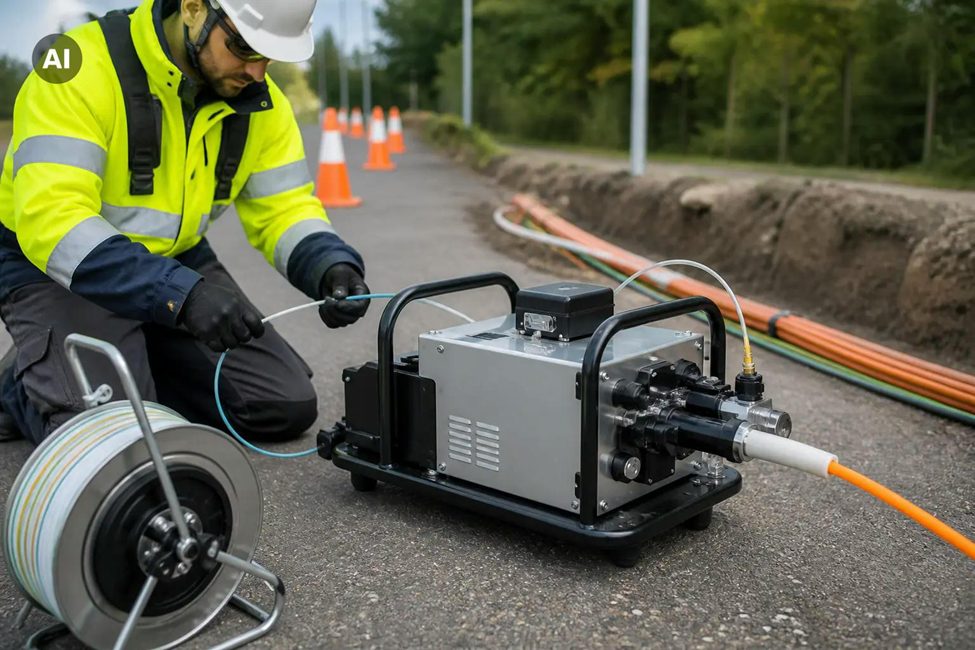
A fiber blowing machine is a specialized tool used to install optical fiber into ducts or microducts using controlled air or nitrogen pressure. Unlike traditional pulling methods that rely on tensile force, blowing machines push or convey fiber by creating an airflow that carries the cable, minimizing friction and mechanical stress. This technology is central to fast and reliable deployment of fiber-to-the-home (FTTH), backbone lines and in-building fiber networks.
Typical systems combine a feed unit, control electronics, and a carriage or clamp that grips the fiber during insertion. Modern units include sensors and software to monitor insertion speed, distance and tension, enabling accurate and repeatable installations over long distances.
Key features to consider
When evaluating a fiber blowing machine, assess capacity, compatibility and control features. Capacity refers to the maximum fiber or cable diameter and the length the machine can insert at a single run. Compatibility includes support for microduct sizes, single- and multi-fiber cables, and whether the unit can handle pre-terminated assemblies or only loose cables.
Control and monitoring functions are critical: look for configurable speed settings, torque or tension control, distance and speed readouts, and fault detection. Some machines offer remote control or tablet interfaces for easier operation on-site. Portability is another factor—handheld or backpack-style units are suitable for short urban runs, while truck- or trailer-mounted solutions are better for long-distance rural deployments.
Manufacturers provide different product ranges and model options to suit particular use cases; for example, technicians often compare platform features before selecting a unit such as a fiber blowing machine that supports multiple duct sizes and automated feed control for versatile field use.
Benefits and common applications
Air-blown installation reduces physical strain on the fiber and lowers the risk of microbends or other damage that can affect signal performance. It is faster than pulling for long runs and allows installers to place multiple fibers into a single duct sequentially without repeated excavations. These advantages make blowing machines ideal for FTTH rollouts, city backbone upgrades, campus connectivity and data center infrastructure.
Beyond speed and safety, the predictable metrics captured during a blowing operation—such as meters installed per minute and insertion force—improve project documentation and quality assurance. This data is helpful for troubleshooting and validating that installations meet service-level requirements.
Maintenance, training and procurement
Reliable performance depends on routine maintenance: calibrate sensors, inspect feed wheels and clamps for wear, and keep pneumatic components clean and dry. Serviceability and spare parts availability are important procurement considerations, especially for contractors with tight project timelines.
Operator training is equally important. Even automated systems require skilled setup: selecting correct duct guides, setting appropriate pressure and monitoring insertion feedback to avoid kinks or blockages. Many vendors offer training courses and field support that accelerate safe adoption and reduce error rates.
Choosing the right solution for your project
Match machine capability to the longest expected run, the types of ducts in your network and whether you will install pre-connectorized cables. Consider total cost of ownership, including compressor needs, transport options and availability of technical support. Request performance specifications and case studies relevant to similar deployments to validate that a selected model delivers the throughput and reliability your projects require.
With careful selection and well-practiced procedures, a fiber blowing machine can significantly cut installation time, protect sensitive fiber, and increase the overall efficiency of fiber network rollout programs.